
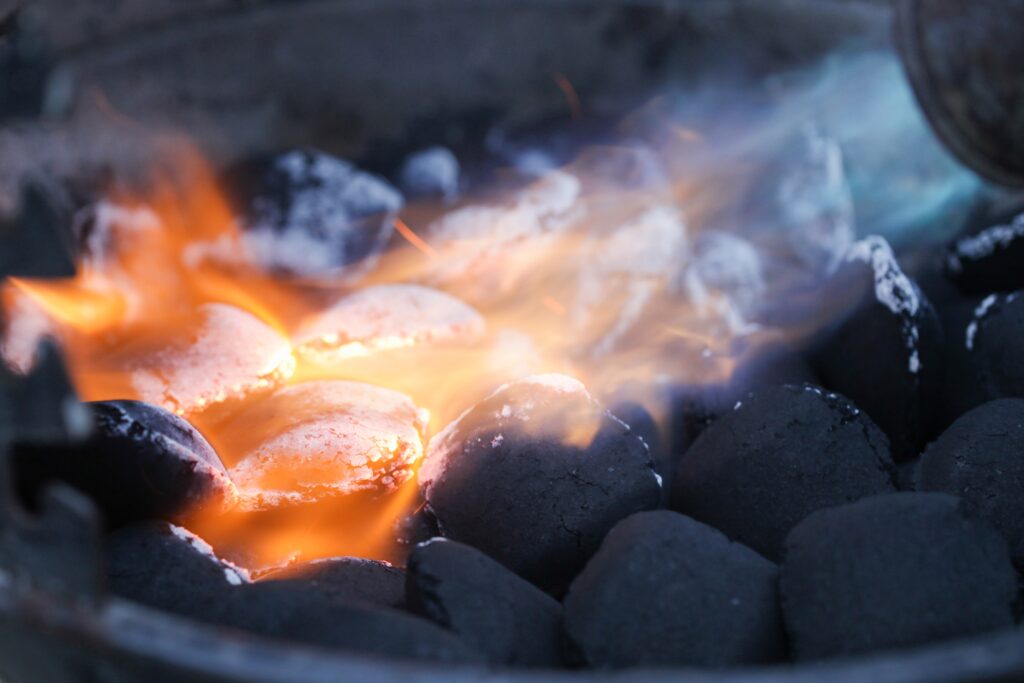
Fire is the original kitchen technology. Long before sous-vide machines and combi-ovens, there was just the flame and the food. Today, despite all our culinary advancements, the primal allure of cooking over an open fire remains unmatched. It is a sensory experience that taps into something deep within our DNA, signaling to your customers that something delicious and authentic is being prepared. At Aztec Grill, we have understood this since 1982. We build the machines that harness this power, but a machine is only as good as the fuel that powers it.
Choosing the right charcoal for your commercial kitchen is not merely a matter of logistics; it is a culinary decision that impacts flavor, texture, and your bottom line. The market is flooded with options, from traditional briquettes to exotic imported hardwoods, and navigating these choices can be daunting. We often see chefs struggling to replicate a specific flavor profile simply because they are using a fuel source that fights against their ingredients rather than elevating them. In this post, let’s explore the nuances of charcoal varieties and how they interact with high-performance equipment like ours to create memorable dining experiences.
Cooking With Charcoal on Commercial Grills
When we talk about grilling, we are really talking about heat transfer. Gas grills primarily utilize convection heat — heating the air around the food — which can dry out proteins before they are properly seared. A Commercial Charcoal Grill, however, utilizes radiant heat. This infrared energy travels directly from the coals to the food, searing the exterior instantly while locking in moisture. This is the secret behind the steakhouse crust that is so difficult to replicate at home.
At Aztec Grill, we take this a step further. Our designs feature a patented air-flow system that ensures approximately 60% of the grilling heat is high-velocity, hot, moist air. This unique combination of radiant heat from the charcoal and moist convection creates an environment where food cooks faster and stays juicier. But to maximize this efficiency, the charcoal itself plays a pivotal role. The density, moisture content, and carbon structure of your charcoal determine how consistently it burns and how much radiant energy it emits.
Lump Charcoal vs. Briquettes | The Great Debate
The most common question we field from new restaurant owners revolves around the fundamental choice: lump charcoal or briquettes? Both have their place in the professional commercial kitchen, but they serve very different masters.
Lump Charcoal: The Purist’s Choice
Lump charcoal is, in essence, wood that has been carbonized in a low-oxygen environment until all sap, moisture, and volatile chemicals are gone. What remains is pure carbon.
- Heat: It burns incredibly hot, often exceeding 1,000°F (538°C), making it ideal for searing steaks or tuna.
- Ash: It produces very little ash, which improves airflow in the grill over long services.
- Flavor: Because it is pure wood, it imparts a clean, distinct smoky flavor that varies by wood type.
- Cons: The pieces are irregular. You might get a bag with fist-sized chunks mixed with dust, which can lead to hot spots if you aren’t careful with your fire management.
Briquettes: The Consistency King
Briquettes are a manufactured product. They are made by compressing sawdust, coal dust, and binding agents (like starch) into uniform pillow shapes.
- Consistency: Every briquette is the same size, meaning they burn at the same rate and temperature. This is crucial for long, slow cooks where temperature spikes can ruin a brisket.
- Burn Time: They generally burn longer than lump charcoal, which can be cost-effective for buffet-style service.
- Flavor: This is the drawback. Lower-quality briquettes can contain chemical fillers (like sodium nitrate for ignition) that impart an acrid, chemical taste to food.
- Ash: They produce significantly more ash, which can clog vents if not managed.
For a high-end Commercial Charcoal Grill, we almost exclusively recommend high-quality lump charcoal or all-natural hardwood briquettes that lack chemical binders. The purity of flavor is non-negotiable for fine dining.
Hardwood Charcoal Options | Flavor Profiles
Once you move past the form factor (lump vs. briquette), you enter the world of wood species. Just as you pair wine with food, you should pair your wood with your menu. Charcoal and Wood Grills allow you to layer these flavors subtly.
Oak
Oak is the backbone of professional grilling. It provides a medium-smoky flavor that is not overpowering. It burns hot and slow, making it a versatile “daily driver” for any restaurant serving a mix of meats and vegetables. It is the canvas upon which other flavors can be painted.
Mesquite
Native to the southwestern US, Mesquite burns hot and fast. It produces a very strong, earthy, and sometimes sharp smoke flavor. It is fantastic for beef, particularly fajitas or thick ribeyes that can stand up to the intense aroma. However, it can easily overpower delicate fish or poultry.
Hickory
Hickory is the classic BBQ smell — sweet, savory, and bacon-like. It is stronger than oak but not as aggressive as mesquite. It pairs beautifully with pork shoulders, ribs, and dark meat chicken.
Fruitwoods (Apple, Cherry)
These are much milder and sweeter. They are excellent for game birds, fish, and pork loins. Using a base of Oak charcoal and adding Applewood chunks is a common technique to get the heat of oak with the top-note aromatics of apple.
Coconut Shell Charcoal | Sustainable Heat
A rising star in the culinary world is coconut shell charcoal. This is not just an eco-friendly alternative; it is a performance beast. Made from the hulls of coconuts—a byproduct of the copra industry—this charcoal is sustainable and creates no deforestation.
For the chef, the benefits are tangible. Coconut shell charcoal is denser than traditional wood charcoal. This means it burns significantly longer—often up to three times longer than standard lump charcoal. It burns with a consistent, high heat and produces virtually no smoke and very little ash.
Why would you want no smoke? In cuisines where the natural flavor of the ingredient is paramount, or where you are using delicate marinades (like in Southeast Asian Satay or high-end Yakitori), you want the heat without the heavy wood smoke interference. It allows the food to speak for itself.
Binchotan | The Diamond of Charcoal
If coconut charcoal is a rising star, Binchotan is the celestial body around which high-end Japanese grilling orbits. Traditionally made from Ubame oak, this “white charcoal” is carbonized at extremely high temperatures (over 1000°C). It is so hard that it sounds like metallic porcelain when struck.
Binchotan burns invisibly. It emits no smoke and no odor, but it releases intense infrared heat. This allows chefs to cook ingredients inches from the heat source without them tasting like soot. It is the gold standard for Unagi (eel) and Wagyu beef. While it is expensive, its burn time is legendary, often lasting 4-5 hours, and it can be extinguished and reused. For a restaurant marketing an exclusive “Robatayaki” experience, Binchotan is essential.
How Commercial Charcoal Grills Are Revolutionizing Cooking
The modern restaurant scene is witnessing a return to heritage cooking techniques, but with a demand for modern volume and consistency. This is where the Commercial Charcoal Grill for Restaurant applications bridges the gap. Chefs are realizing that “wood-fired” is not just a cooking method; it is a marketing powerhouse.
Menu items listed as “Oak-Grilled” or “Wood-Fired” command higher price points. They promise an experience that the customer cannot replicate at home with a gas stove or a microwave. Chefs like Rick Bayless and Dean Fearing have long touted the benefits of our Aztec Grills because they provide that authentic flavor profile on a commercial scale.
By utilizing a dedicated charcoal grill, kitchens can execute menu items with complex flavor profiles without needing heavy sauces. The smoke rings on a brisket or the char marks on a grilled peach salad become part of the presentation. It allows for a “less is more” approach to ingredients, where the quality of the protein and the quality of the fuel do the heavy lifting.
Optimizing Fuel for Your Aztec Grill
Your Aztec Grill is built like a tank, lined with heat-holding firebrick and insulated with double walls of stainless steel. To get the most out of this engineering, you need to manage your fuel correctly.
- Airflow is Key: Because our grills are so well insulated, they retain heat exceptionally well. You do not need to overload the firebox. Use the dampers to control the burn rate. With high-quality lump charcoal, you can achieve searing temperatures with a smaller fuel bed than you might expect.
- Zoning: Create different heat zones. Pile your charcoal higher on one side for searing and leave a thinner layer on the other for resting or slow-roasting. The slant of our grate system assists with this, but fuel management is the foundation.
- Maintenance: High-ash fuels (like cheap briquettes) can block the air intake if not cleaned regularly. Using low-ash lump or coconut charcoal reduces the frequency of cleaning required during a busy Friday night service.
The soul of your restaurant lies in the flavor you deliver, and when you cook with fire, your charcoal is your most important ingredient. Whether you choose the intense, raw heat of hickory lump charcoal, the consistent endurance of coconut shells, or the refined elegance of Binchotan, the choice should be deliberate.
At Aztec Grill, we build the stage, but you provide the performance. By understanding the science and art of these fuel sources, you unlock the full potential of your Commercial Charcoal Grill, turning simple proteins into culinary masterpieces that keep patrons returning. Do not settle for generic fuel. Test different woods, experiment with sustainable options, and find the fire that fits your food.
Ready to elevate your kitchen’s grilling game?
We can help you match the perfect grill configuration to your specific menu needs.
Contact Aztec Grill today to consult with our experts about your kitchen’s needs.
Frequently Asked Questions
Q. What is the most cost-effective charcoal for a busy commercial kitchen?
For high-volume restaurants, a high-quality hardwood briquette or a dense lump charcoal often provides the best balance. While Binchotan is superior in heat, it is cost-prohibitive for general grilling. Coconut shell charcoal is becoming a very cost-effective middle ground due to its long burn times, meaning you use less product per shift.
Q. Can I use wood logs in my Aztec Commercial Charcoal Grill?
Yes. Our grills are designed as Charcoal and Wood Grills. You can burn pure wood logs, or use a combination of charcoal for the heat base and wood logs for the flavor and visual flair. Using split hardwood logs is excellent for adding specific smoke profiles to your dishes.
Q. How do I prevent chemical tastes when using briquettes in a Commercial Charcoal Grill for Restaurant use?
The most effective way is to avoid “match-light” or “instant-light” briquettes entirely, as these are saturated in lighter fluid. Always choose “all-natural” hardwood briquettes that use natural starches (like vegetable starch) as binders rather than chemical additives. Additionally, ensure the coals are fully grey-ashed over before placing food on the grill to ensure any volatile compounds have burned off.