
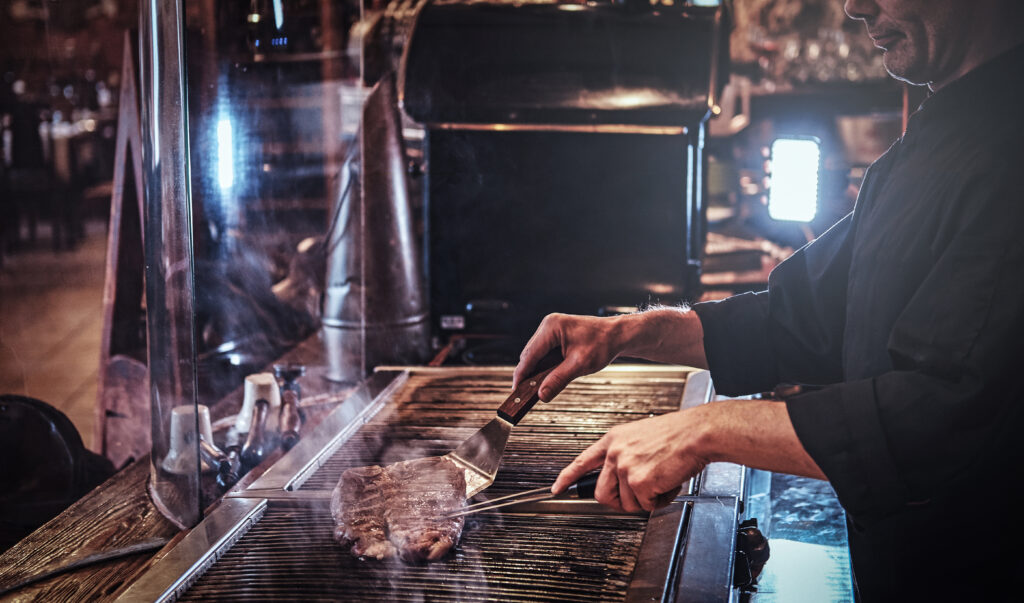
As a restaurateur, you already know that choosing an equipment layout for your kitchen makes or breaks ticket times, table turns, and even flavor profiles. Put your culinary crew and cooking equipment through their paces during one busy dinner service, and every element of your workflow is amplified. When it comes to cooking technology, the grill is arguably the most important fixture. Developing deep flavors, impeccable textures, and signature sears means finding the perfect fit for your brand. Considering fuel sources, heat mechanisms, and system durability will help narrow down your options and find the right fit for your business.
Why it Matters: Choosing a Commercial Grill Type
From hood space to station heights, the design of a kitchen line dictates the overall workflow during peak-volume periods. When comparing commercial grill types, it’s important to consider how each model will affect day-to-day operations. Installing the wrong type of cooking equipment creates massive bottlenecks that slow down your kitchen and leave servers waiting on tickets.
Fuel source also has a direct impact on flavor development. Some cooking styles use direct heat to retain as much seasoning as possible, while others use their fuel source to create a unique smoked flavor. No matter what you decide, knowing how your preferred cooking methods affect flavor will help you design a menu your customers will love, and your competition will envy.
Commercial grills are also measured by how much food they can cook at once. Your setup will largely depend on your kitchen’s size and menu. Small food trucks may get away with a small footprint grill, but high-volume restaurants with large menus require large cooking surfaces.
Considering your grill’s energy output and your building’s capacity is also important for long-term efficiency. Make sure your restaurant can support your desired grill with enough natural gas supply, hood capacity, and check to see if your city even allows for solid-fuel burning!
Gas Grills
Restaurant gas grills are the standard for many reasons. Gas grills for restaurants typically run on natural gas or LP to create a burn that warms metal, ceramic, or lava cooking rocks below the grill grate.
The main advantage of gas comes in the form of heat-up times. On a gas grill, your line cook can ignite the system and have it ready to cook within 15-20 minutes. There’s no waiting around for your grill to heat up like there is with other fuel sources.
Another advantage of gas grills is the ease of temperature control. Each gas burner has an individual valve that can be used to create hot and cool zones on your grill. Want to have a high-temperature zone on the left for searing? No problem. Leave the other side on low to finish thicker cuts, or just render some fat? You got it.
Gas grills are also the most common application for restaurants that need to crank out quick-turn fast food-style meals like burgers, chicken breasts, and seafood.
Charcoal Grills
Who doesn’t love smoked BBQ flavor? If catching that heavy smoked taste on every plate is your style, then commercial charcoal grills are for you. Charcoal units use the combustion of charcoal to heat your grill.
Charcoal grills produce such intense heat that you can actually cook with the smoke alone. As meat cooks, the fat begins to drip onto the coals, which creates smoke and floods your food with that delicious smoky flavor.
Due to the high amount of heat and smoke output, kitchens that use charcoal need to pay attention to kitchen ventilation and proper grill cleanup. Make sure your kitchen can handle a charcoal grill system before making your purchase.
Wood-Burning Grills
If you truly want to embrace that open flame flavor, there’s nothing like cooking with wood. From oak to mesquite, cooking with all-natural hardwoods can create a one-of-a-kind flavor that can’t be found in gas or charcoal.
Unlike other cooking methods, wood-burning grills allow you to utilize VOCs (Volatile Organic Compounds) that are released while burning wood to season your food. You can also take advantage of the natural flare-ups that occur when cooking with wood to truly customize your chef’s experience.
Due to the exposed flame and smoke, wood-burning grills are also a great center stage showpiece for kitchens with display areas. Just like with charcoal grills, make sure your ventilation system can handle the extra smoke output that wood burning creates.
Electric Grills
Although they aren’t as common, electric commercial grills are a great fit for buildings that don’t allow gas hookups or ban solid fuel combustion. Electric grills run on electric coils that are covered by thick layers of metal or cast-iron grill grates.
Electric grills are best used for indoor commercial kitchens that lack the structural support for gas or charcoal. Bowling alleys, food courts, strip mall kitchens, and older historical buildings are all great examples of where you would see an electric grill. Electric grills are also super convenient. All they require is a dedicated electrical outlet.
Since there is no combustion, these grills also have the least amount of smoke output of any gas or solid fuel grill. They still don’t produce the smoky flavor that gas or solid fuels do, but their heating pattern is extremely consistent. Electric grills are great for training new cooks and kids.
How To Pick The Best Grill For Your Restaurant
Now that you have a basic understanding of each type of commercial grill. Here’s how to decide which grill fits your needs best.
Consider your kitchen’s physical size and hood capacity. Wood/charcoal grills create a lot of smoke and will need to be paired with a commercial kitchen ventilation system that can support solid fuel cooking. These systems typically require either a water wash hood or a grease fire suppression system with a spark arrestor.
Next, ask yourself what your menu will look like. Fast-casual concepts might benefit more from gas grills, while high-end steak houses might swear by live fire cooking to establish their brand.
Make sure your building can support your desired grill type. Do you have natural gas? Will your hood support a charcoal grill? Is wood burning legal where your restaurant is located?
Tips From The Grill Pit | Food For Thought
When browsing for grills, look closely at the material thickness that makes up the firebox. Many cheaper models use low-grade steel that can’t handle the ups and downs of a commercial kitchen. The last thing you want is for your grill grate to warp during service.
Maintenance & Daily Operations
Regardless of which grill you decide on, proper maintenance is critical to keeping your grill running like brand new. Food debris on the cooking grates will cause your food to stick and pick up old flavors. Empty your grease system and ash-catching system daily to prevent serious fires.
Repairability should also be taken into consideration when looking at new grills. High-production kitchens will wear out commercial equipment fast, so opting for systems that have easily replaceable parts will save you time and money.
Like with any cooking equipment mission, don’t cheap out on your grill. Cheaper grill models are not made to stand up to the rigorousness of a commercial kitchen and will let you down when you need them most.
Partner With Aztec Grill | Commercial Grills Designed For Wood-Burning Cooking
Building your dream restaurant is no easy task. You need cooking equipment that will stand up to the task and not let you down when it matters most. At Aztec Grill, we manufacture high-quality commercial stainless steel grills built with the chef in mind. Our heavy-duty grill products are designed to bring professional-quality cooking into your restaurant without the high price tag. Made with stainless steel, precision-engineered airflows, and powerful insulation, our grill equipment is built to handle anything you throw at it.
Check out our handcrafted commercial grill options and find the perfect fit for your next kitchen build.
Frequently Asked Questions
Q: What should I look for when installing wood-burning grills indoors?
Indoor kitchens typically have to add on commercial kitchen ventilation systems that include some type of exhaust fan, grease filter, and spark arrestor. Additionally, most cities will require you to have a fire suppression system and schedule routine cleanings to prevent creosote buildup.
Q: How does heat distribution differ between gas and charcoal grills?
Gas grills heat up quickly and allow for easy temperature control with individual burner valves. Charcoal heats much hotter and creates more consistent heat across the grill.
Q: Why is it important to buy a heavy-duty stainless steel grill?
Commercial kitchens produce extreme amounts of heat on a daily basis. This constant heat causes steel to warp, rust, and deteriorate over time. Thicker stainless steel heats faster and retains heat better while keeping your grill’s frame from warping.