
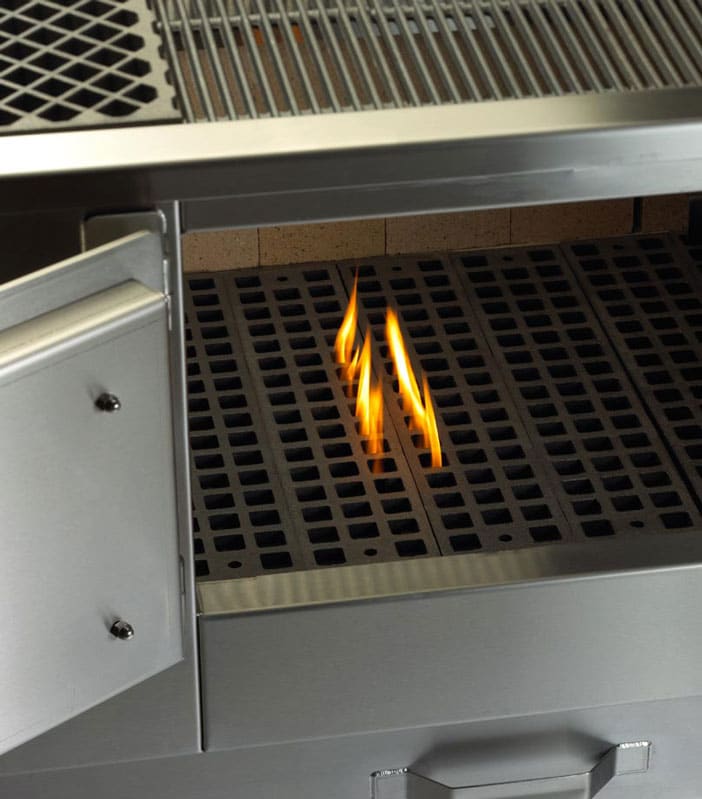
An open-flame cooking system adds flavor variety that most restaurant patrons dream about, but radiated heat and active fires come with significant safety concerns. Whether loading wood fuel or flipping saucissons over glowing embers, kitchen employees work in dangerously hot conditions. Take wood-fired grill safety seriously by implementing policies, providing safety gear, and training employees on how to safely work around solid fuel cooking equipment.
Why Wood-Fired Grill Safety is Important
Safe operation around commercial wood-fired grills means managing high volumes of radiant heat, hot coals, and errant embers. Employee kitchen safety policies protect your staff and facility by preventing serious burns, eliminating fire hazards, and reducing workers compensation incidents. Established safety procedures also enable your line cooks to work faster and more efficiently around open-flame cooking equipment without sacrificing kitchen productivity.
Commercial solid-fuel cooking takes extra attention when compared to working around gas burners. Wood logs catch flame much quicker than turning on a burner knob. Embers can escape into ventilation hoods and ash buildup can restrict airflow, which can lead to unpredictable flare-ups. Implementing safety procedures creates organizational consistency around your cooking station that will keep cooks safe while still delivering high-quality food.
How to Train Staff on Proper Grill Safety Procedures
Safety training starts with established procedures for properly lighting, maintaining, and extinguishing wood fires each day. Employees should understand how conduction affects their bodies, how loading fuel impacts fire size, and where to find controls for airflow.
- Startup — Clear excess ash, stack cured wood, and use natural fire starters
- Service — Slowly add wood by regulating airflow controls
- Shutdown — Spread coals apart and close lid to let fire extinguish naturally
Employees should never use paper products or pour accelerants like lighter fluid or alcohol on wood logs to speed up lighting time. Fire starters, natural wood tinder, or liquid propane logs designed for easy lighting create a hot fire without dangerous chemical burn hazards.
Employees should also exercise caution during peak service periods when manipulating hot coal beds. Push hot coals towards the back of the firebox. Creating hotter and cooler zones will help avoid direct heat exposure towards your staff’s chest. When cooking slows down, staff should never dump water directly onto heated firebrick liners or commercial-grade grill grates. Thermal shock can cause firebrick to crack apart, and instant boiling can spray a staff member’s face. For proper wood ash disposal methods, read our how-to article on cleaning wood-fired grill ash.
What Safety Equipment Should Employees Use?
All line cooks should be equipped with personal safety equipment to create a barrier from radiant heat, embers, and grease fires. Commercial cooking around wood-fired grills requires apparel designed to withstand high temperatures.
Heat-resistant gloves and aprons guard hands and arms during active grill service. Wear flame-resistant gloves that reach beyond your elbows when handling iron grates or lifting wood fuel. Canvas, denim, or heavy cotton aprons protect your body from flying embers. Avoid any aprons made from synthetic materials like polyester or nylon. Synthetic materials melt onto skin when exposed to open flame.
Protect feet with slip-resistant shoes that have reinforced toes. Spilled ash and hot grease can damage skin just as much as dropped wood logs or heavy cast iron pans. Safety glasses with side shields keep wood ash and floating embers out of employees’ eyes when scraping vents or moving around hot coals.
How to Keep Employees Safe Around Cooking Equipment
Ensuring employees have enough space to work safely around food stations reduces trip hazards near active flames. Arrange workplace supplies so employees aren’t bumping into objects while flipping burgers or saucing poultry.
- Restaurant employees should keep all boxes, supplies, and equipment at least 3 feet away from the front of the grill.
- Use anti-slip floor mats to provide traction while servers carry heavy pans or platters near cooking equipment.
- Store all fire extinguishers within ten feet of your cooking station.
Restaurant exhaust ventilation systems should always be turned on when your grill is in use. Certified commercial sweepers can remove grease and oily creosote from ventilation ducts.
Can your employees identify three fire hazards around the grill without moving from their station? Conducting quick mental exercises like this encourages your staff to be aware of their work environment.
How kitchen staff members move around cooking stations impacts overall employee efficiency. Learn how to improve employee restaurant kitchen workflow with these tips.
Top Wood-Fired Grill Safety Tips
Establishing safety procedures around your cooking station prevents injury to employees and property. Once kitchen staff knows how fires spread, they can reduce burn hazards and prevent catastrophic grill fires.
| Grill Safety Hazards | Cause | Best Practice Solutions |
|---|---|---|
| Creosote | Built up inside ventilation ducts from unburned wood particles | Perform daily exhaust inspections, have ducts professionally swept monthly |
| Overfilling Firebox | Putting too many logs in firebox | Add wood slowly, keep inside firebox at max 50% capacity |
| Grease Fires | Animal fats dripping into ash pans below cooking grids | Clean grease pans and dump ash out daily |
You should always load firewood slowly and carefully. Cooks should use long-handled grill utensils or heat resistant gloves to place logs on the coal bed. Placing wood directly on hot coals can send flying sparks and grease splatter toward the person loading fuel.
To prevent grease fires, restaurant employees must clean grease trays daily. Animal fats from roasting chicken or bacon will pool in ash pans over time. If a grease fire does occur, cover the fire with baking soda or cut off the air supply instead of throwing water onto the grease pan.
If grease or fire begins to creep toward the ventilation hood, trigger the fire response protocol. Shut off fuel sources, pull the fire alarm if flames come in contact with ventilation ducts, and clear the cooking line.
Tips for Preventing Grill Station Equipment Damage
Daily restaurant equipment inspections reduce risks by allowing cooks to spot fire hazards before they spread. Solid fuel cooking equipment suffers more wear-and-tear compared to propane cooking stations.
| Component | Interval | Where to Look |
|---|---|---|
| Cooking grids | Daily | Cast iron or stainless steel grill bars should not be twisted or misshapen. Skillets should not wobble when placed on the cooking surface. |
| Firebox | Daily | Commercial fire brick should be intact without any large cracks or areas where fire brick is missing. Damage to firebox lining can expose cooks to direct heat from metal cabinet. |
| Firebox Crank | Weekly | Check grill door crank for smooth operation. Use silicone high temp grease to lubricate crank mechanism. |
| Conveyor Lift cables | Weekly | Check rise and fall cables closely for fraying or cuts in cables. Like the crank, use silicone high temp grease to lubricate cables. |
| Ventilation hood and ducts | Monthly | Creosote is flammable and will build up inside of ventilation ducts over time. Cooking wood releases creosote as it burns. If creosote catches fire, it burns at temperatures high enough to burn through most metal ducts. Professional cleaning prevents this hazardous buildup. |
Don’t worry if your restaurant kitchen equipment doesn’t last forever. Find out what affects appliance life-span and how to prolong the health of your kitchen equipment.
How to Create a Restaurant Safety Culture
Restaurants with strong safety cultures hold team members accountable for their actions and encourage staff to help keep fellow employees safe. Holding staff leaders accountable for safe grill operation starts with manager lead by example.
- Hold team safety meetings for 5 minutes at the start of each shift.
- Place visible safety checklists near your wood-fire station that detail steps for grill startup, mid-shift operations, and shutdown.
- Implement a safety suggestion program that allows cooks to provide feedback on safety concerns or defective equipment.
- Assign one team member per shift to be the safety observer. Charge this employee with monitoring overall line conditions and identifying unsafe employee behaviors.
Safety Tip: Call out your staff when they do something safe. If an employee clears a pass for your fellow cooks or notices a heat glove is starting to crack, offer praise that this employee is looking out for their team. Catching employees doing something right is more effective than shouting when they do something wrong.
Tips to Prevent Grill Damage from Aztec Grill
Aztec Grill’s commercial grill safety tips will help you protect your employees and reduce downtimes. Hiring trained restaurant employees is only half the battle. Cooking with solid fuel requires durable restaurant equipment designed with safety in mind. Aztec Grill engineers commercial grill safety tips into every product we build. Features like heavy-insulated fireboxes, heat shield crank handles, commercial-grade stainless steel construction, and removable ash trays are designed with employee safety in mind. Keep your culinary team safe with commercial wood-fire cooking safety equipment designed for outstanding performance. Browse our commercial grill equipment catalog to discover how Aztec Grill keeps kitchens safe today.
Frequently Asked Questions
Q. How should restaurants dispose of wood ash after closing?
Wood ash should be stored in a designated metal container with a secure lid. Restaurant employees should never use plastic containers or trash bags for wood ash storage. Located ash container outdoors away from your restaurant building, wooden decks, or dumpster for at least one day to ensure all coals are extinguished.
Q. When should restaurant owners review safety procedures with staff?
Brief kitchen staff on commercial grill safety monthly, and include grill fire response procedures quarterly. Every new employee must learn wood-fire grill safety from your staff before working around grill stations alone.
Q. What type of fire extinguisher do restaurant kitchens need?
Wood-fire grills need commercial kitchen ventilation hoods with a built-in wet chemical suppression system. Keep Class K fire extinguishers near grill stations for vegetable oil fires and Class A extinguishers for wood fires.